
Zuna comes from the Sanskrit śuna: growth, prosperity, wellbeing, the conditions in which life flourishes. We chose the name because that’s what we think yoga is for: developing the capacity to participate in life more fully, consciously, and with greater freedom to choose our own direction. We call that Soul Science.
Imagine being in a small boat at sea. You didn’t choose the boat, the weather, the current, or where you began. At first, you simply go where the conditions take you. Then you discover the rudder. You can adjust your course and respond to what is happening around you.
With time, you learn to use the sails. You begin to understand the wind, the water, and the boat itself: where it is strong, where it is limited, and how to work with changing conditions. You still can’t control the sea, but you have developed more freedom in how you move through it. And with that freedom, a new challenge arises: Where to go?
That is the shift at the heart of the Zuna Yoga® method. First, we develop the capacity to meet life more skillfully. Then we begin to ask what direction is actually our own.
The health and fitness of the body’s systems, and the release of what the past has left in them. A clarified sensory system.
Seeing what’s actually doing the steering. The inherited patterns that feel like you, made visible enough to be chosen rather than repeated.
How much of life can actually reach you. Contact with what’s here, inside you and around you, clearly enough to be moved by it and steady enough to respond.
A direction that’s your own. Not a goal but the thing underneath your goals, which the whole of you organizes around once you can see it.
Building a life of our own choosing, consciously and with the creativity and passion of an artist, is a skill. To help make this possible, our method develops four capacities that support one another. Whether through our yoga or meditation trainings, these same four capacities provide the framework. The practices may emphasize them differently, but the aim is the same: greater regulation, sensitivity, and self-knowledge, so that purpose and meaning can be felt more clearly in who we are and how we choose to live.
The challenges that arise through practicing our method are an inherent part of the process of self-transformation. Think of a rocket breaking free of Earth’s gravity. Energy builds until a threshold is reached, and then movement becomes possible in a new way. The discipline, self-study, and willingness to surrender to what practice reveals reflect the same three elements the old texts describe as Kriya Yoga: tapas, svadhyaya, and ishvara pranidhana.
For us, liberation isn’t escape from life, but greater freedom to move and create within it.
- Everett Newell, founder of ZUNA YOGA®
Regulation begins with the body and its systems. The breath, heart, nerves, digestion, and the chemistry of stress and recovery each have their own level of health and fitness: how well they can rise to a demand and then return to calm. But they don’t work in isolation. Your state at any moment is heavily influenced by how well those systems communicate and work together. When they’re fit and aligned, you have the capacity to manage what comes with greater ease. When they’re not, the internal friction between them makes everything more difficult.
Another factor that disrupts regulation is a learned stress response, created by obsolete programming. A response that was right for conditions that ended years ago. A tension that once protected something and has outlived it. These run beneath awareness, creating interference and distortion that shape both perception and response.
Regulation is the work of bringing each system back into condition, restoring the conversation between them, and releasing the residue of the past. We do it through breath, through movement built with an intentional arc from effort toward rest, and through deep relaxation taught as a skill. It’s where our method begins, because everything the other capacities do depends on a body clear enough to feel and settled enough to see.
Sensitivity is how much of life can actually reach you. Most of us have learned, for good reasons, to keep experience at a distance. We build a layer between ourselves and the world, and it works: less gets in, less hurts. But the same layer also keeps out the experiences that matter. We may be able to see what’s out there and still be separated from the living of it. Picture a fish in a bowl, set down in the middle of the ocean. It’s surrounded by exactly what it was made for, and separated from all of it by a wall of glass. Insulated from the life it was meant for.
Instinct says the wall is safety. But protection and safety are not always the same thing. What can’t be sensed can’t be understood, and what can’t be understood can’t be worked with, or trusted. The person who senses the least is the most exposed. Sensitivity isn’t fragility; it’s the opposite. It’s being in contact with what’s actually here, inside you and around you, clearly enough to be moved by it and steady enough to respond.
That steadiness is the part most approaches miss. Contact without clarity is just noise, and leaves perception flooded with distortion. So we build both together: through sustained meditation, through periods of silence, through breath that opens sensation and supports steadiness, and through movement guided by what you feel rather than what a shape should look like. Strength without sensitivity is rigidity. Sensitivity without strength is fragility. Our method is built to develop them both.
Most of what steers us was in place before we ever thought to question it. Beliefs, expectations, roles, ambitions, fears, ideas about who we should be. They arrive early, from family and culture and whatever once earned approval, and they settle in so deeply that they stop feeling like influences at all. They feel like us. A decision can seem entirely our own while following a course set years ago by someone else’s expectation, or by what we happened to be good at. People reach what they set out to achieve and find it means less than they expected, and can’t say why.
Self-Knowledge is the capacity to see what’s actually doing the steering. Not to uncover some hidden true self, and not to throw out everything we learned from others, but to make the forces shaping our choices visible enough to be considered rather than simply repeated. Sometimes that changes nothing. A person looks closely and continues exactly as before, now by choice rather than by habit. What changes is whether we’re moving toward something or being driven by it.
This is the argument the school was built on. Yoga has always talked about liberation, and yet it is often taught in ways that ask us to follow: a teacher, a lineage, a set of answers. We think the point of the training is the opposite. It’s to return authority to the person doing the work. We develop this capacity through self-inquiry taught as a practice, through philosophy read as an examination of your own life rather than as doctrine, and through the length of an immersion itself, which interrupts the routines that keep our patterns invisible. Follow no one. Become your own authority.
We’re each born with a compass that only works for us. Not a map, and not a set of instructions. A direction that belongs to no one else, which no teacher can supply and no tradition can hand over. It rarely arrives as a single revelation. It becomes recognizable slowly, usually through doing rather than before it, and it can be expressed very differently across the stages of a life while remaining the same direction underneath.
Purpose is what that direction does to us once we can see it. When we’re moving toward something that matters, the whole of us organizes around it: attention settles, effort shows up that wasn’t there a moment before, and the same day, the same work, feels different. The reverse is just as revealing. When direction is lost, through disappointment, or the slow recognition that a long-held path no longer fits, the effect isn’t confined to how we think. Sleep, energy, appetite and mood all reorganize around it. Direction isn’t an idea sitting above a life. It runs through the whole system.
Purpose depends on the ground prepared by the other three. Self-Knowledge clears that ground; it shows us what we’ve been organizing our lives around without knowing it. Purpose is what becomes visible once what genuinely inspires us, what authentically compels us, is brought to the surface and recognized.
The old texts described four fundamental aims of human life, the Purusharthas: ways of understanding what we seek, what sustains us, what gives life direction, and what ultimately leads toward liberation. We work with them directly, but the aim is never to tell you what your purpose is. It’s the confidence that you’re on your own path, which is a more honest promise than knowing where it ends. We develop it through inquiry turned outward, through the work of building a practice and a livelihood that fit you, and through the mentorship that follows a training, where the question of what comes next turns real. It’s why so many people arrive here with no intention of teaching, and leave wanting to share what they found.
Our method of practice is a kind of polishing that clears what obscures, inviting more of what is genuinely ours to be felt and revealed. A single practice can work on several things at once. Breath can settle the body, sharpen sensation, expose a habit, and clarify direction. Movement can regulate state while revealing how we respond to effort. Meditation can steady attention while showing us what keeps pulling it away. Breath, Body, and Intention are the three ways we organize that work.
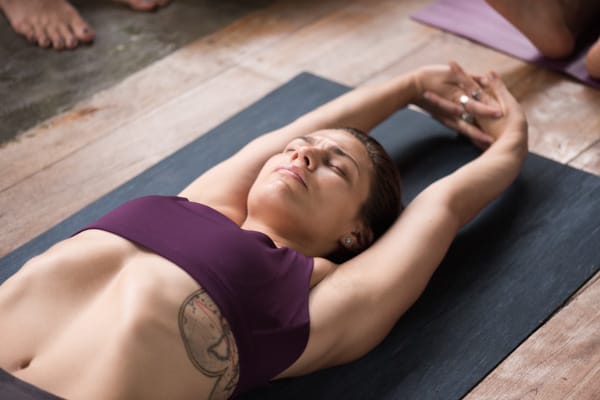
Breath does two things at once. Fuller and slower, it feeds the heat that discipline generates in the body and mind. And through its rhythm and smoothness it keeps the nervous system from overreacting, holding the presence we need to feel clearly and look at ourselves honestly.
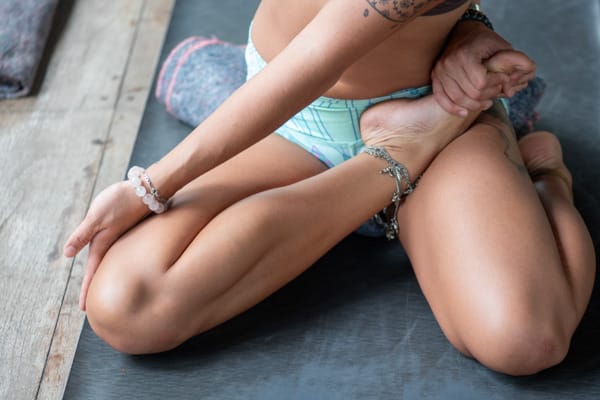
The body is a gemstone being polished. Posture, movement, and mechanics are the tools, and the work is disciplined but never forced: refining how the body responds to effort, tension, and habit. As its strength, sensitivity, and responsiveness are trained, more of what’s in it shows through.
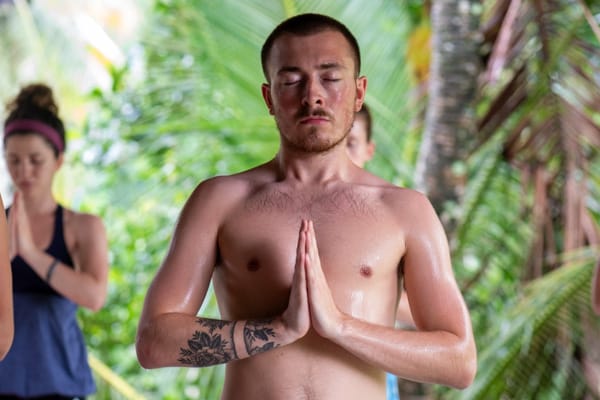
Every practice has a purpose beyond performance. Discipline polishes the gem. Self-study helps us see what the polishing reveals. What shines through was there all along, beneath the conditioning we picked up on the way. When we surrender to that inner truth, we find both the comfort of self-knowledge and the courage to follow it.
The inner landscape of the mind and body is like a garden. Our thoughts, desires and attitudes, whether they are of conscious or unconscious origin, are the seeds of our intentions. Our life force energy, primarily derived from breath, is the fertile force that brings these seeds to life.
In Zuna Yoga®, we guide you to weave breath consciously into movement and intention, allowing your internal systems to awaken and recalibrate. Through breathwork and deep relaxation, balance is restored in the nervous system and emotional body. From here, your authentic self emerges naturally.
Somatic integration is a cornerstone of Zuna Yoga®, anchoring our understanding of the body as a gateway to transformation. In our method, the body isn’t just something to move or stretch. It’s a sensory system, a guide, and a mirror. Through skillful practices, we awaken its intelligence to unlock lasting change.
Learn to feel and interpret your body’s internal signals. Through breath, posture, and subtle activation, you develop whole-body awareness and coordinated movement. This deep sensory intelligence strengthens your connection to yourself, supporting more conscious action and a richer experience of life.
We foster seamless communication between the brain and body. You’ll learn to move from a place of calm intelligence, where strength is supported by sensitivity and effort is guided by awareness. This shift from force to balance awakens a refined bodily intelligence, letting you express your power with ease and stay fluidly adaptable in practice and in life.
We create the conditions for your nervous system to return to balance. Through mindful movement, deep relaxation, and meditative awareness, you’ll learn to shift smoothly between states of activation and rest, cultivating resilience, emotional clarity, and a grounded sense of wellbeing.
Emotions are explored through the body, not just the mind. Our cues guide you to turn your awareness inward, so you can feel more deeply and meet emotions on a visceral level. This approach builds emotional intelligence and a deeper sense of inner stability.
We don’t just focus on correct posture; we help you organize the body to support breath, energy flow, and ease. With a deep understanding of anatomy, physiology, and energy systems, Zuna Yoga® offers a distinct approach to aligning the body for strength, balance, and fluidity, so energy moves freely and expression comes naturally.
Zuna Yoga® is rooted in the integration of the body’s systems: fascia, bones, breath, organs, and joints, working together rather than in isolation. By synchronizing them we create fluid, balanced movement that is deeply supported, allowing effortless motion and a closer relationship between the body and its environment.
Most modern yoga stops at calming the mind and relieving stress. At Zuna Yoga®, we see that as the beginning. Rooted in Tantra and Hatha Yoga, our method is a practice with an intention behind it: to reveal what’s already in you, and to build a life from it.
The tools are the full spectrum of the tradition: asana, bandha, mudra, pranayama, mantra, and meditation. We use them not only for wellbeing but for what yoga was always promising: living freely and fully, with purpose and real self-knowledge.
The koshas describe different layers of experience, from the physical body through energy, mind, and wisdom toward something quieter and wiser within us. They’re often presented as sheaths to be moved through or transcended. We find it more useful to think of them as different levels of perspective. Each kosha reveals more of the landscape that shapes who we are. One of the most useful things they show is how much of our sense of self is bound up in the outer layers, and what becomes possible when it isn’t.
The Zuna Yoga® method is rooted in Sri Vidya, a living tradition of Tantra centered on self-knowledge, purposeful living, and full participation in life. It is the tradition our founder was initiated into and continues to study.
Our trainings are not formal initiations into a lineage, but a practical exploration of its philosophical wisdom.
Within this same stream sits Hatha Yoga, with its methods of posture, breath, bandha, mantra, and meditation. Our framework also draws from texts including the Hatha Yoga Pradipika, Gheranda Samhita, and Yoga Sutras, which we approach as guides for practice rather than literal doctrine.
Several traditional ideas remain central to our method. Tantra points toward development and integration. Karma describes how past experience continues to shape perception and behavior. Smarana, or self-remembrance, points toward recognizing what is already present within us.
We approach these teachings with curiosity rather than dogma. Where modern science can help us examine what the tradition describes, we welcome it and allow it to refine our understanding. Other ideas are better explored through practice and through the changes we observe in our own lives. Where questions remain unresolved, we are comfortable leaving them open to further inquiry.
This allows us to draw from the depth of the tradition without asking students to accept every claim or interpretation made in its name. We share what we find useful and meaningful in ways that remain practical, non-dogmatic, and open to examination.
To see clearly what is, untainted by expectation, need, or judgment. It asks us to look beyond the stories and protections that can distort what we see, so we can meet ourselves and our lives more honestly. Truth becomes a lifelong blossoming into greater clarity, wisdom, and a more meaningful experience of life.
The ability to perceive and embrace the essence of a person or thing. Loving is seeing, and allowing ourselves to be seen, unguarded. The depth of love we experience grows with our capacity to be vulnerable.
We began with a boat being carried by the sea. The sea hasn’t changed, and we still can’t control everything that happens around us.
What changes is our capacity to respond. Regulation helps us remain steady. Sensitivity helps us notice what is happening. Self-Knowledge helps us recognize what is shaping our choices. Purpose gives those choices direction.
This is what we mean by agency. Not control over life, but the ability to participate in it more consciously and choose our direction with greater freedom.
That is the purpose of the Zuna Yoga® method, and what we mean by Soul Science.